

Start early enough to create options
Reuse needs time. Photograph items, record quantities and sizes, and be honest about condition. Leaving the decision until handover week can remove otherwise practical resale or donation routes.
Large matching sets are useful to some buyers, while individual high-quality pieces may suit a direct resale channel.
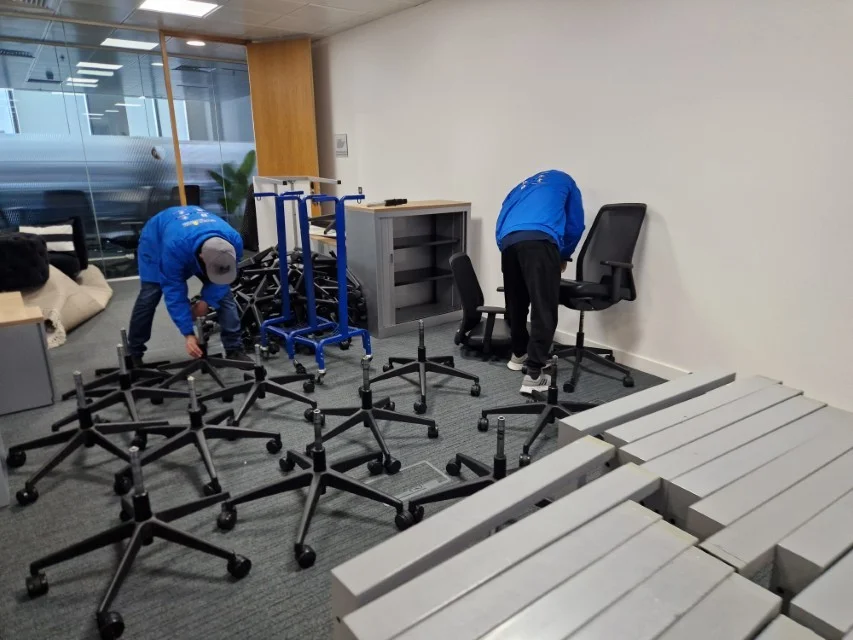
Clear photographs, quantities and condition notes create more reuse options.
Grade by condition and demand
Clean, complete and current furniture is easier to place than damaged, highly customised or incomplete pieces. Separate items that can be used immediately from those needing repair or parts.
A resale assessment is not a guarantee of value. Transport, storage, handling and market demand all affect the outcome.
- 01
- Internal reuse first
- 02
- Resale or donation
- 03
- Material recovery
- 04
- Disposal last
Use a clear hierarchy
Prioritise internal reuse first, then suitable resale or donation, followed by material recovery and recycling. Disposal should be the final practical route rather than the automatic starting point.
Record what happens to significant asset groups when environmental reporting or audit trails matter to your organisation.
Connect removal and replacement
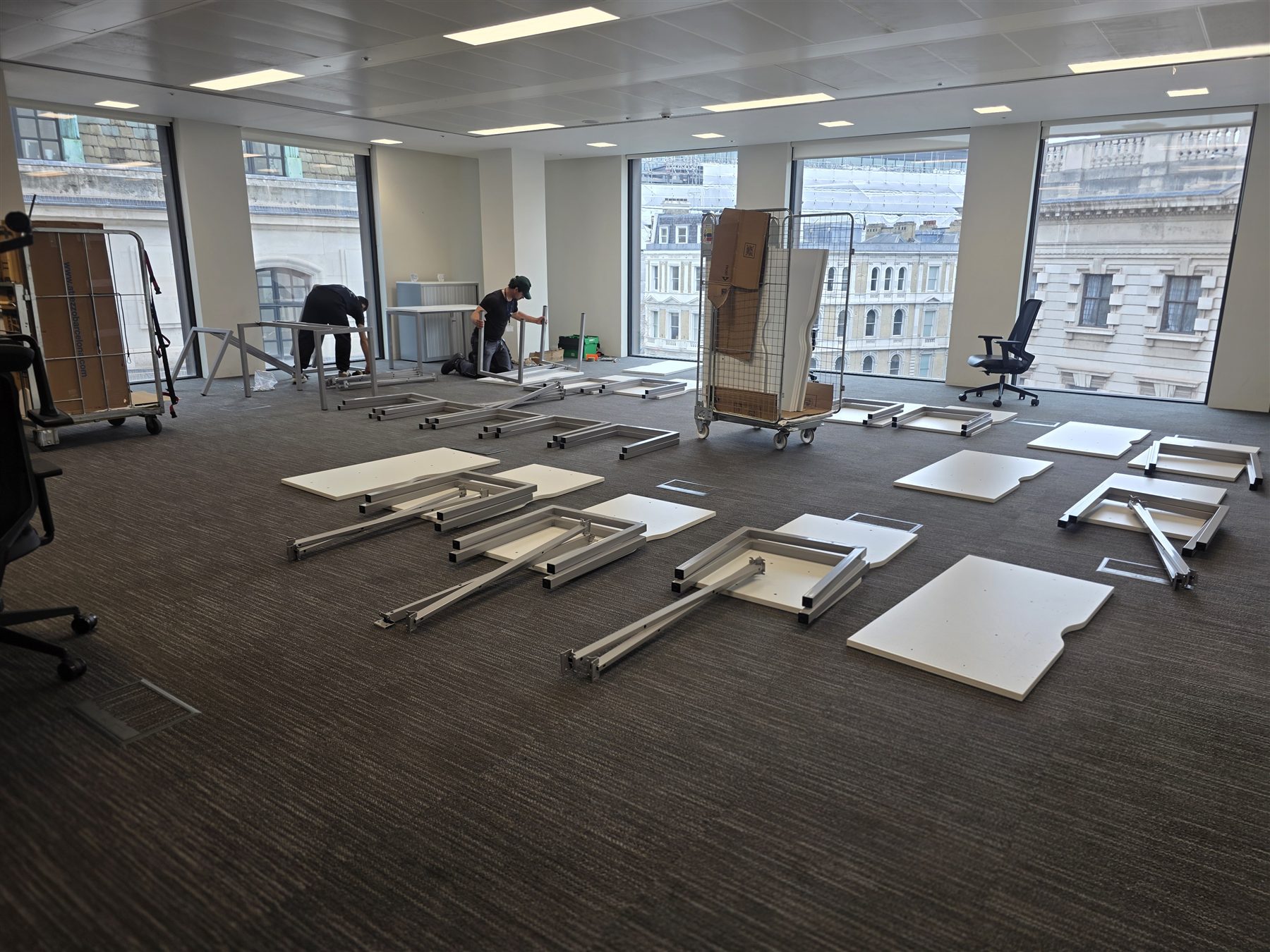
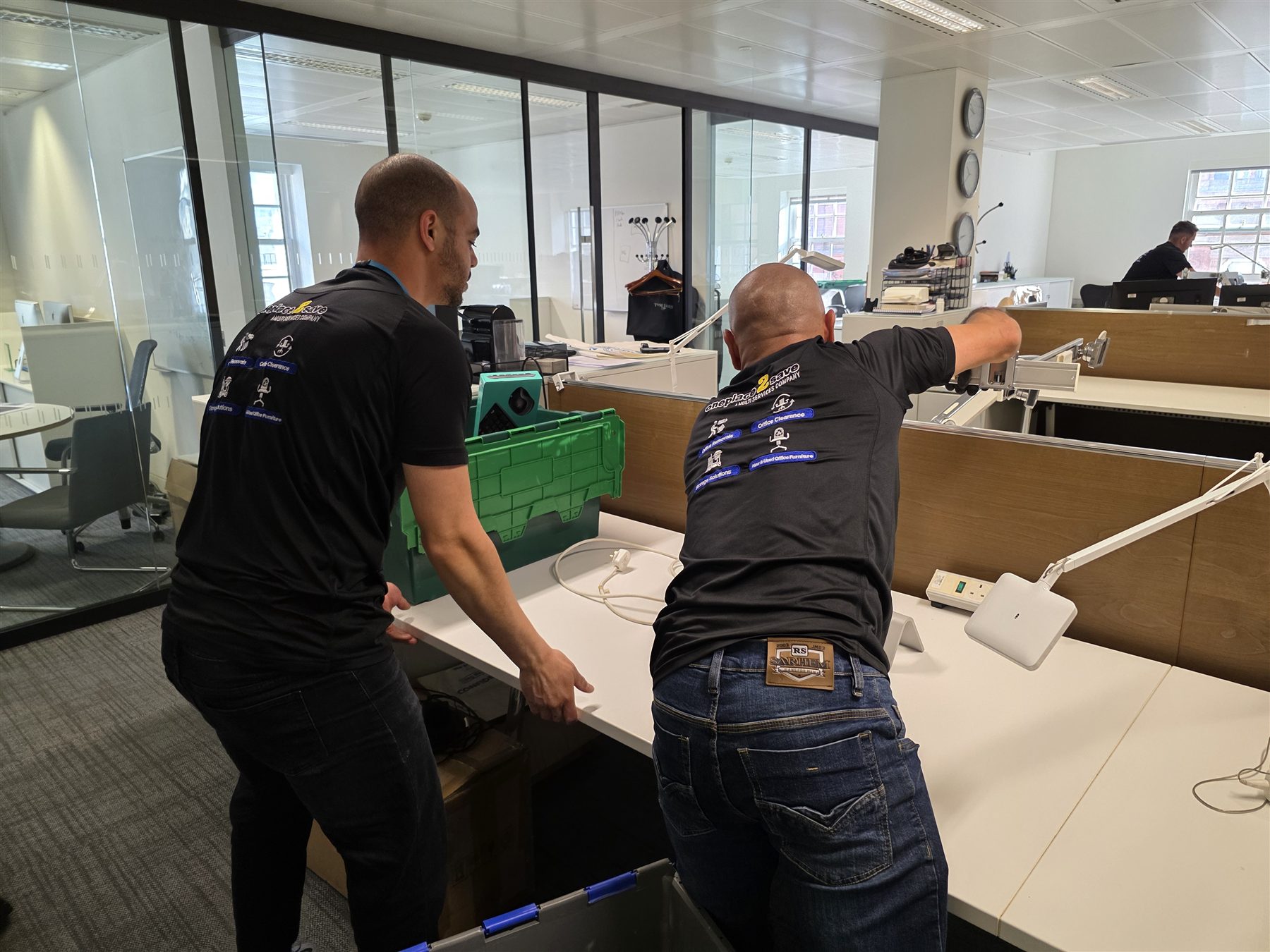
Coordinating old-furniture removal with new-furniture delivery can reduce duplicated access, labour and disruption. It also makes the final layout easier to verify.
Oneplace2save can support clearance and transport, while My Used Furniture provides a dedicated route for quality pre-owned office furniture.
Disposal should be the final practical route, not the automatic starting point.
Reuse-first approach
Planning a live project?
Share the locations, timing and rough scope. The team can turn it into a workable brief.
Request a quote ↗