

Follow the route before moving day
Walk the route at both sites. Confirm dimensions, loading arrangements and permitted times; an address alone is not an access plan.
- 1
Desk
- 2
Corridor
- 3
Lift
- 4
Loading bay
- 5
Vehicle
- 6
Destination
The whole plan in 30 seconds
- 01
Start with the restart
Decide who must be working first.
- 02
Agree one brief
List the scope, contacts and decisions.
- 03
Check the route
Confirm access at both sites.
- 04
Label destinations
Give each item a place to go.
- 05
Walk through the finish
Check the scope and assign follow-ups.
A sample article for layout review
Illustrative planning guidance. The library photographs show separate Oneplace2save operations, not one documented move.
Walk through the move, one decision at a time
Start with the outcome and work backwards. These library photographs illustrate separate operations, not one documented move.
- 01
Plan the first working morning, not just the moving day
A successful office move is not simply a building emptied and a lorry unloaded. It is a workplace where people can find their equipment, reach the right room and get back to useful work. That makes the restart the best place to begin your plan.
Oneplace2save team beside a branded van, with moving crates and trolleys on the pavement. Agree the people, equipment and priorities before the move. Existing library photograph from a separate operation.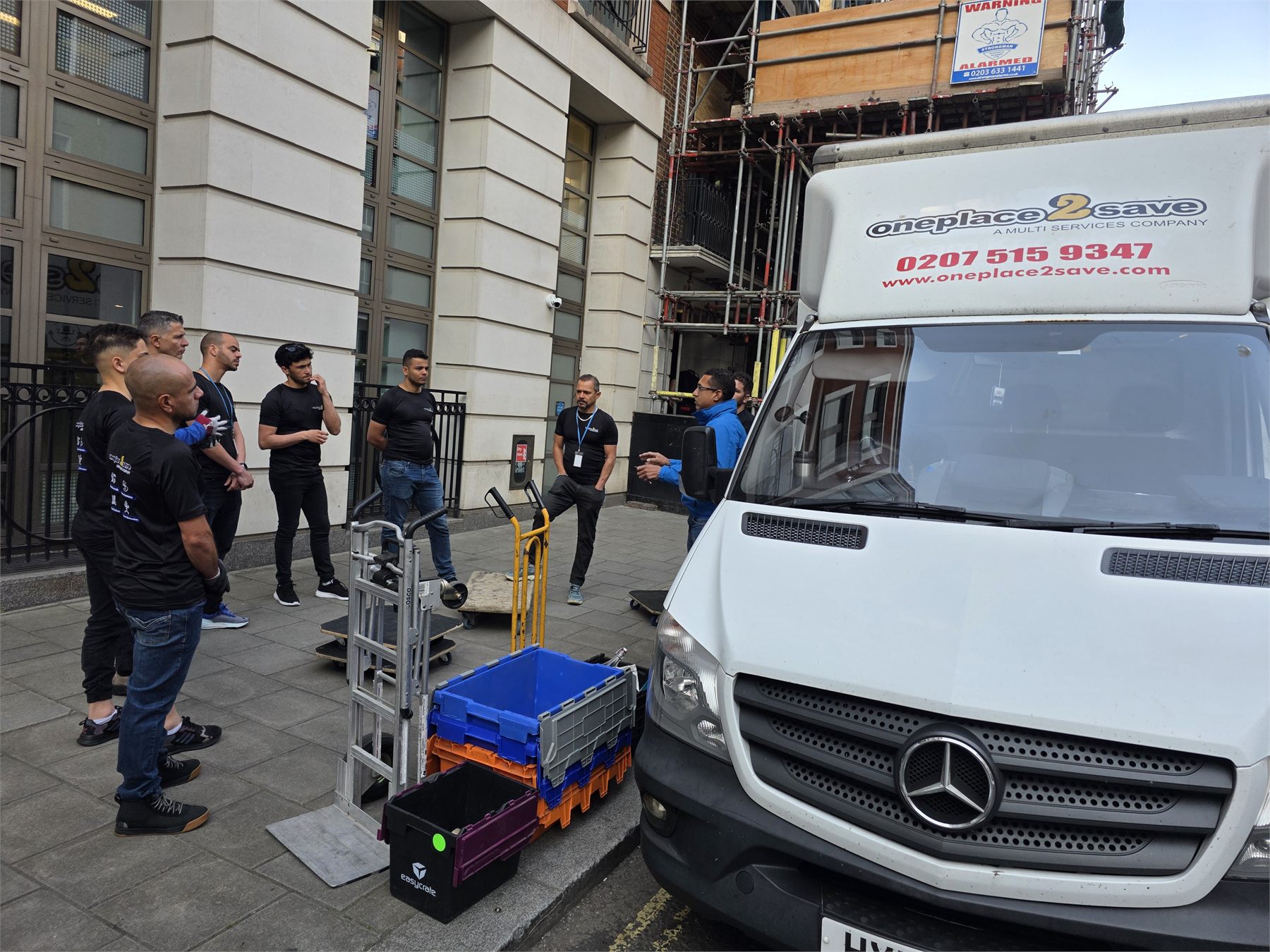
Agree the people, equipment and priorities before the move. Existing library photograph from a separate operation. - 02
Put the important decisions in one place
Before you request a detailed quote, bring together the information that changes the job: both addresses, the working deadline, the items travelling and the services you need. If a quantity or date is uncertain, say so; an explicit assumption is more useful than a confident guess.
A Oneplace2save crew member handling office partition panels beside desks. Furniture handling has its own sequence. Identify what needs dismantling, protection and placement before the move starts. Existing Oneplace2save library photograph.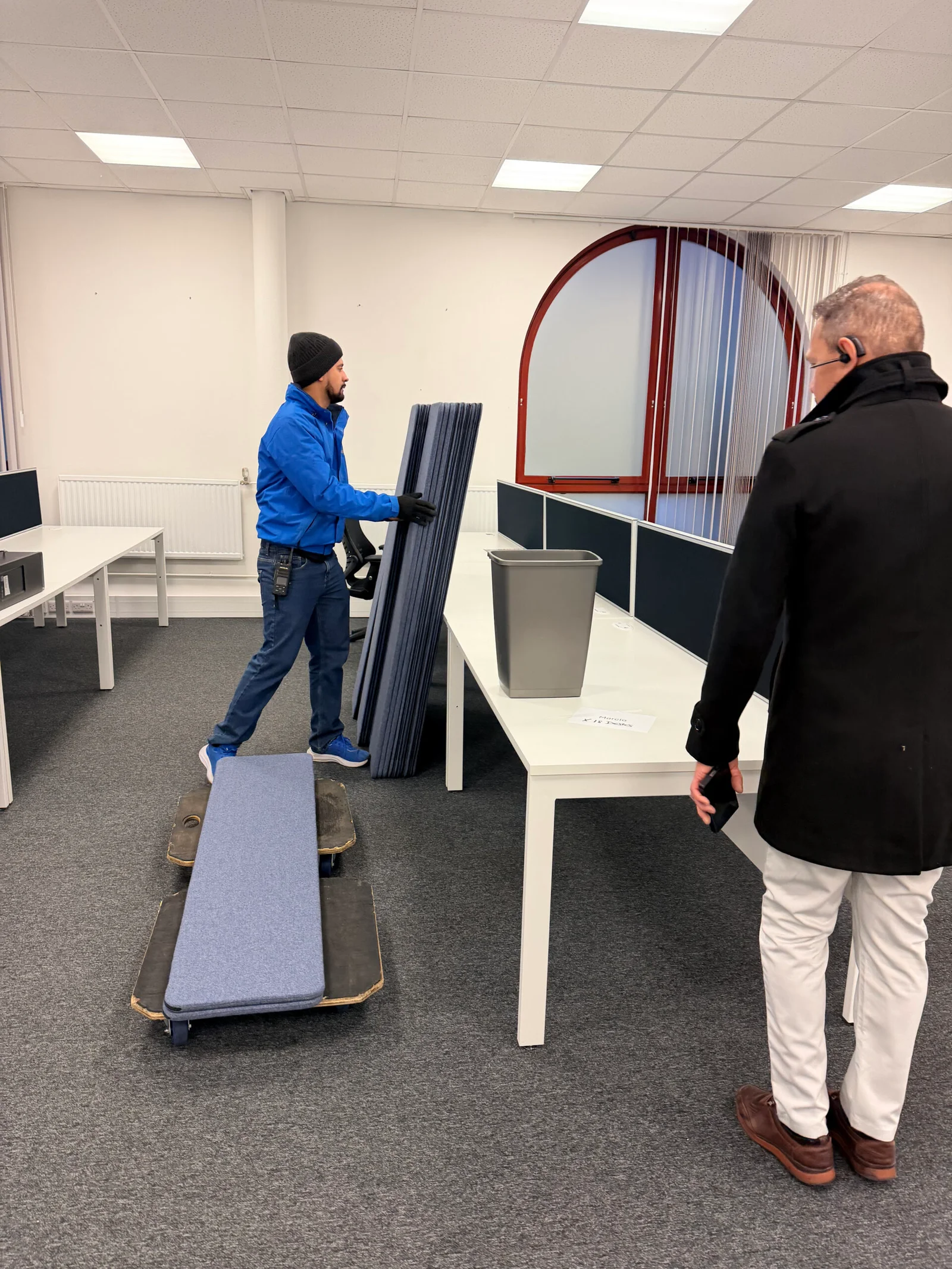
Furniture handling has its own sequence. Identify what needs dismantling, protection and placement before the move starts. Existing Oneplace2save library photograph. - 03
Check the route from the desk to the vehicle
An address does not describe the full access route. Walk through the journey that a desk, crate or cabinet will take: the room, the corridor, the lift or stairs, the entrance and the loading point. Repeat that check at the destination.
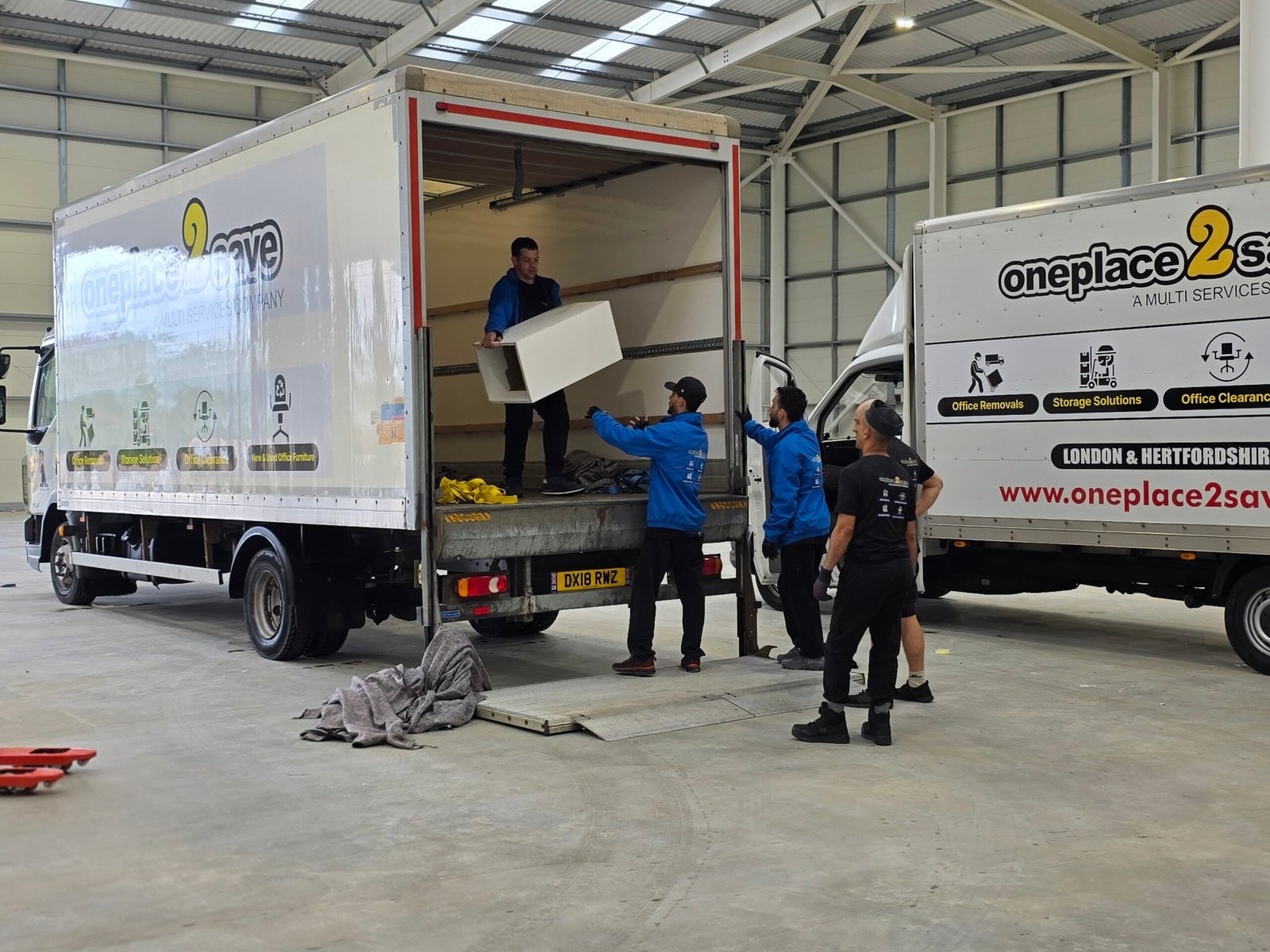
A Oneplace2save Luton van and a larger removal vehicle at a loading area. Match the loading arrangements to the vehicles and access available at each site. Existing Oneplace2save library photograph.
Match the loading arrangements to the vehicles and access available at each site. Existing Oneplace2save library photograph. - 04
Give every item somewhere specific to go
A label saying only “office” leaves the important decision until unloading. Use a simple destination system that the packing team, delivery crew and office colleagues can all follow. For example, “Floor 2 / Finance / Desk 04” tells the next person where the item belongs.
Two Oneplace2save crew members dismantling office furniture and handling chair components. Keep furniture components identifiable so they can be matched to the right destination. Existing library photograph; not a completed handover.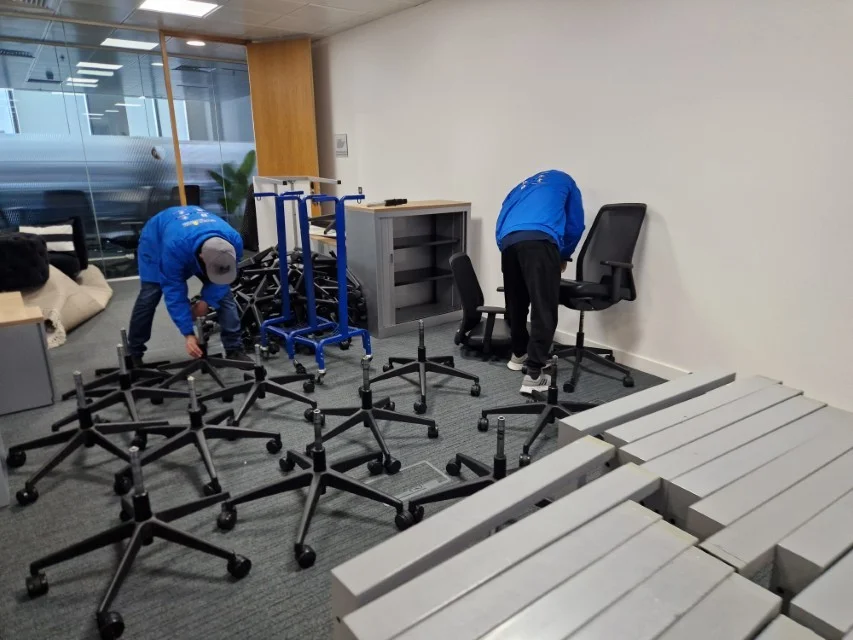
Keep furniture components identifiable so they can be matched to the right destination. Existing library photograph; not a completed handover. - 05
Finish with a walkthrough, not a pile of boxes
Set out what completion will look like before work begins. At the destination, check that agreed furniture is in the right zones and priority items are accessible. At the original site, check the areas included in the clearance or move scope.
Oneplace2save crew loading furniture into a branded removal vehicle outside a commercial building. From collection to handover, keep the agreed inventory and responsibilities clear. Existing library photograph of furniture handling, not a record of the example move.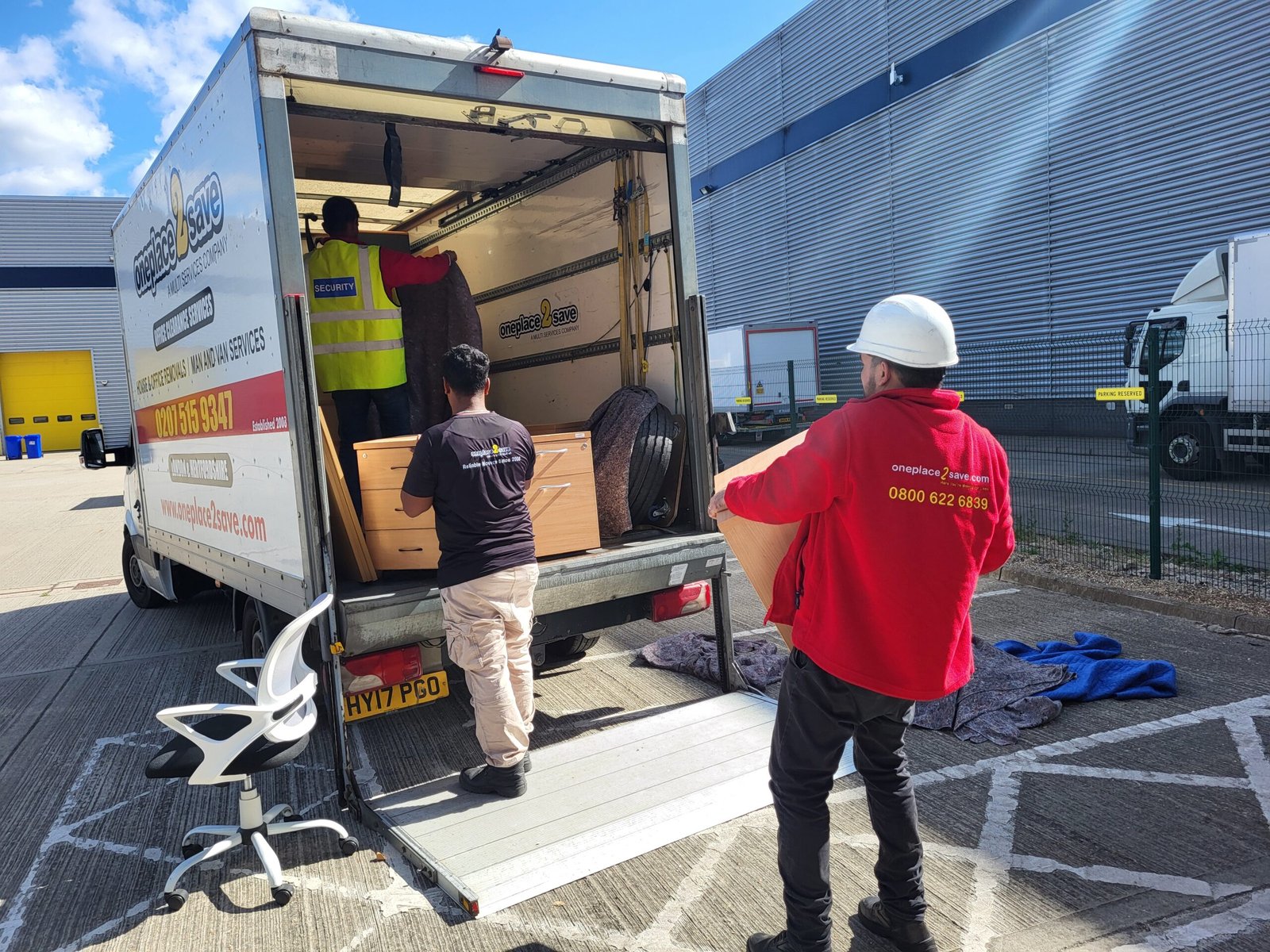
From collection to handover, keep the agreed inventory and responsibilities clear. Existing library photograph of furniture handling, not a record of the example move.
A label that tells the next person where to go
Illustrative label: Floor 2 / Finance / Desk 04. Match it to your agreed floor plan.
- Floor
- 02
- Team
- Finance
- Destination
- Desk 04
Move day is only the middle
- 01
Before
Agree the brief, access, destination labels and priorities. Assign a decision-maker at each site.
- 02
During
Keep loads and furniture parts identifiable. Follow the agreed collection and delivery sequence.
- 03
After
Walk through the scope, confirm responsibilities for IT checks and record outstanding items.
An empty office does not mean unrestricted access
Lift bookings, loading windows, building contacts and crew availability still need confirmation. Agree these before fixing the plan.
The access checklist
Progress is saved only in this browser. No details are sent to us.
0 of 6 complete
Your first-morning handover checklist
Progress is saved only in this browser. No details are sent to us.
0 of 6 complete
Planning the move? Open the detail you need
The fuller guidance and common questions are here when you need them.
Plan the first working morning, not just the moving day
Decide which teams must be operational first and what they need to do that. A reception team, a customer-support desk and a meeting room may have different priorities. Turn those needs into an agreed sequence, then work backwards through delivery, packing and collection.
The aim is to reduce avoidable disruption, not promise that a move will have none. A clear brief lets everyone see what is included, what depends on another team and what still needs a decision.
Put the important decisions in one place
Choose one decision-maker for each site and one person responsible for approving changes. Keep the same version of the brief with the move team, building management and your internal colleagues.
What belongs in the move brief
The collection and delivery addresses, floors and site contacts.
An inventory grouped by destination, including items that need dismantling.
The proposed move window and the teams that need priority delivery.
The packing, furniture handling, storage or clearance support required.
Open questions, exclusions and who will resolve them.
Check the route from the desk to the vehicle
Ask building management about agreed working times, loading arrangements, lift bookings and any protection needed for shared areas. Record confirmed arrangements separately from requests that are still awaiting approval.
A practical example: if the collection lift is available in the morning but delivery access begins later, that gap must be part of the programme. It should not be discovered after the first vehicle has been loaded.
Give every item somewhere specific to go
Match those labels to an agreed floor plan and keep furniture parts or fixings identifiable. Record exceptions such as items going to storage, equipment being handled by your IT team or furniture staying at the original site.
Keep the equipment and essentials needed first easy to identify. Do not assume that the last box packed will automatically be the first item available at the new premises. Agree the loading and delivery priorities with the move team.
Finish with a walkthrough, not a pile of boxes
Give your IT team a separate restart checkpoint. Moving equipment and confirming that systems are ready for colleagues are different tasks; the handover should name the responsible person for each.
Record anything outstanding, who owns it and the next agreed action. A short, shared list is more useful than relying on several people to remember different conversations at the end of a busy day.
Can the move happen outside working hours?
Evening or weekend working can be discussed, subject to crew availability and the access arrangements at both buildings. Confirm the actual time window rather than assuming that an empty office means unrestricted access.
Ask how any out-of-hours plan affects building contacts, lift access and your own team's availability. The useful question is not only when the move can happen, but who will be available to support it.
What should we send when asking for a quote?
Start with both addresses, the preferred timing, a rough inventory, access details and a short explanation of the support required. Useful photographs can help explain the scope, while a survey may be needed to confirm the details.
If you are still deciding what to keep, say which decisions are open. That gives the team a clearer basis for discussing removals, storage and any separate clearance needs without treating unconfirmed assumptions as part of an agreed price.
Make storage part of the plan
If the new premises are not ready for everything at once, discuss storage before collection. List the items, expected duration and any access you may need while they are stored. Availability and the agreed scope still need confirmation.
Keep the storage inventory connected to your destination plan so the later delivery is a planned stage, not a second guessing exercise. The accompanying photograph is from the existing Oneplace2save library, not a record of a specific move described here.
People, equipment and the route between them

Turn the plan into a practical brief
Share both addresses, timing, inventory and access details. Tell us what is still undecided so the team can agree the scope with you.